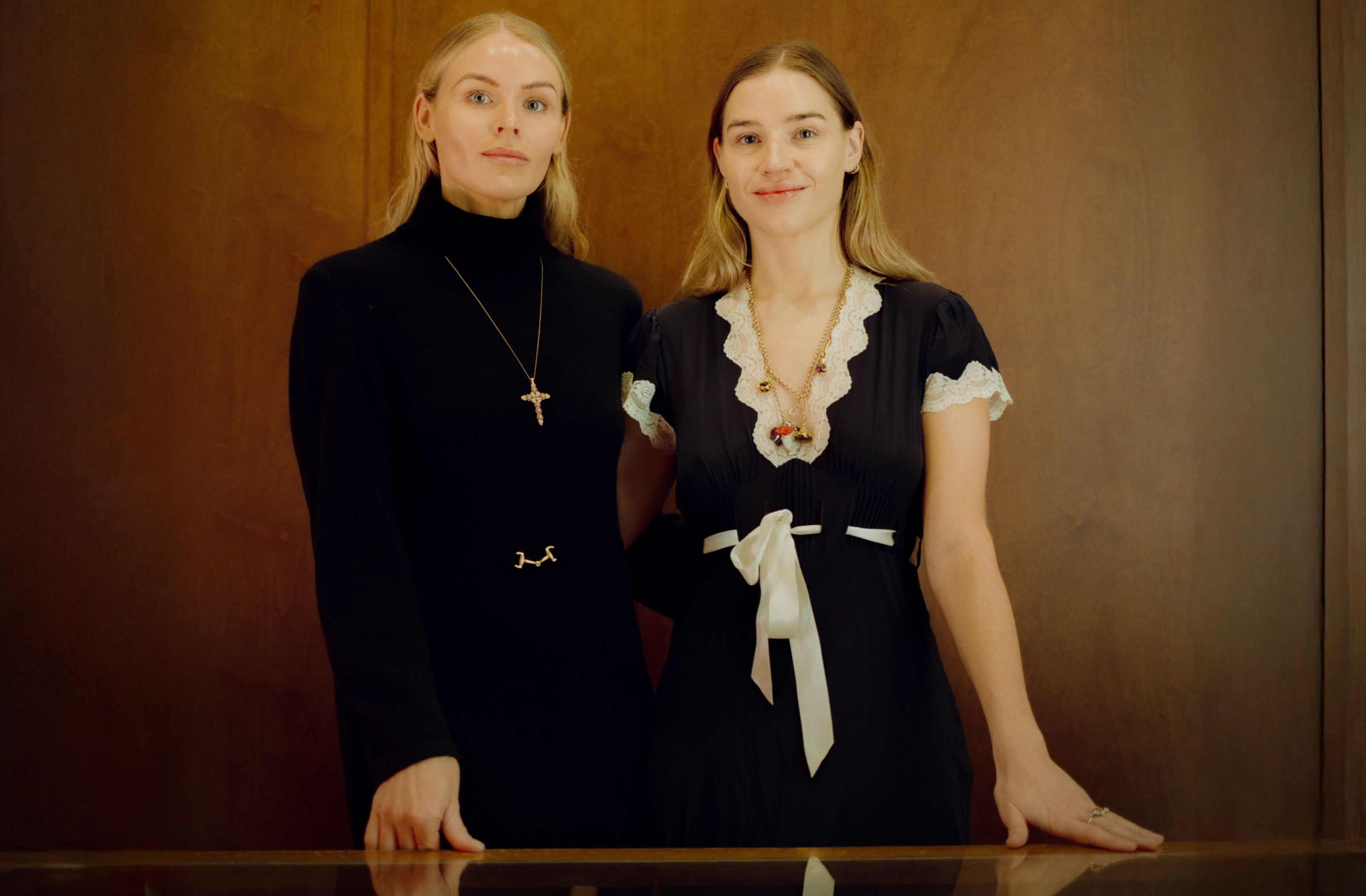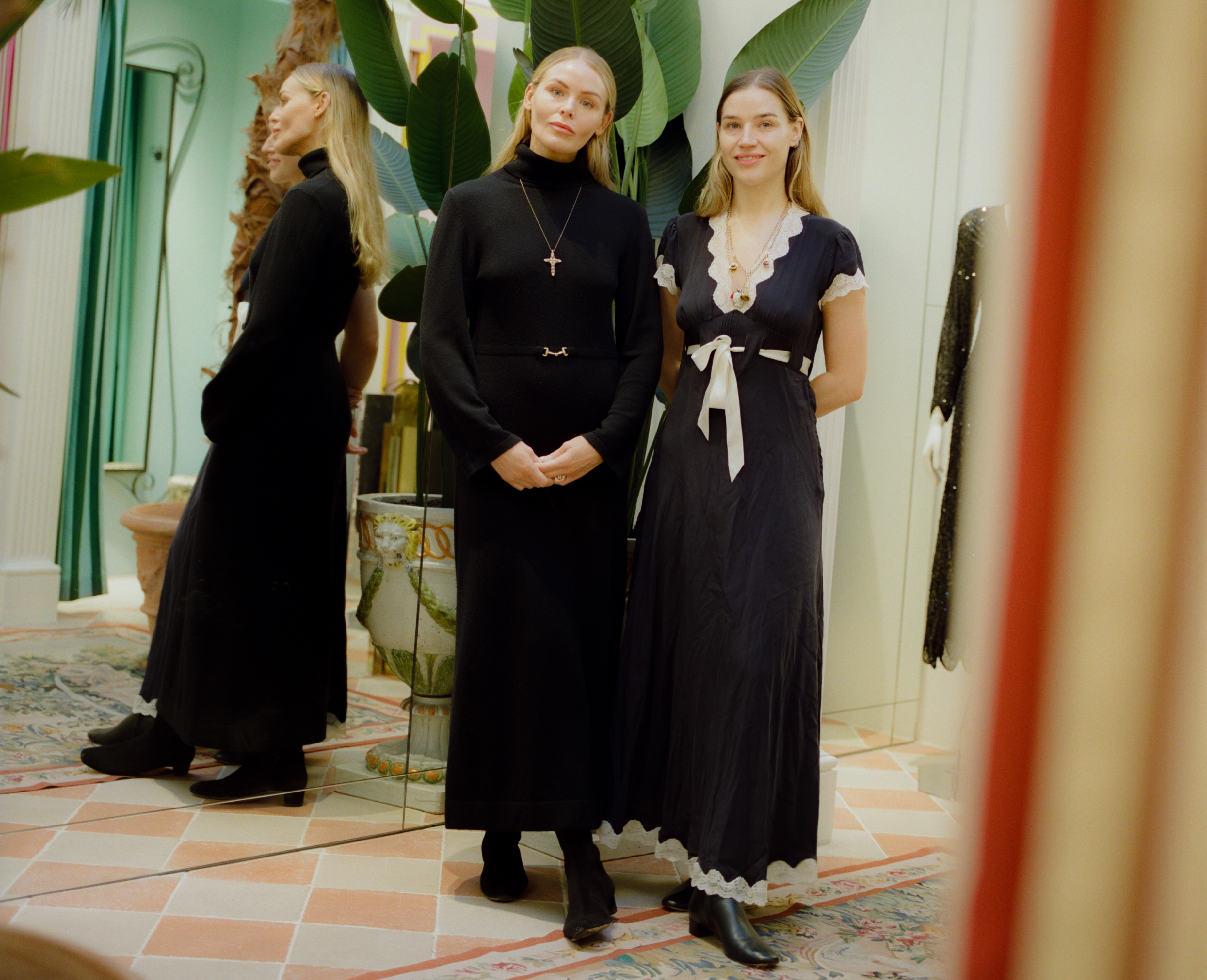
The first thing you notice about Henrietta Rix and Orlagh McCloskey is the energy, fast, bright, overlapping, the kind of shared shorthand that only forms after ten years of building something together from absolutely nothing. When one speaks, the other glances over as if double-checking they’re remembering the same version of events. They usually are. Mostly.
A decade ago, before Net-a-Porter, before the global stockists and the bridal appointments and the women wearing RIXO on red carpets, there was a borrowed rail in a borrowed room. “We literally did everything,” Henrietta says, laughing — the kind of laugh that still carries traces of mild trauma. “Packing orders on the living-room floor, talking to the press, dragging a rail into restaurant receptions. It was just the two of us doing it all.” The floors were uneven, the margins microscopic, but the optimism, bottomless.
While the broader industry sprinted towards airbrushed polish, influencer economics and algorithmic scale, RIXO launched with something almost old-fashioned: two women designing dresses other women genuinely wanted to wear. Silk, joyfully printed, vintage in spirit but modern in instinct. A brand born not from strategy decks but from eye, intuition and a shared belief that getting dressed should be fun.
Ten years on, that instinct remains the engine.
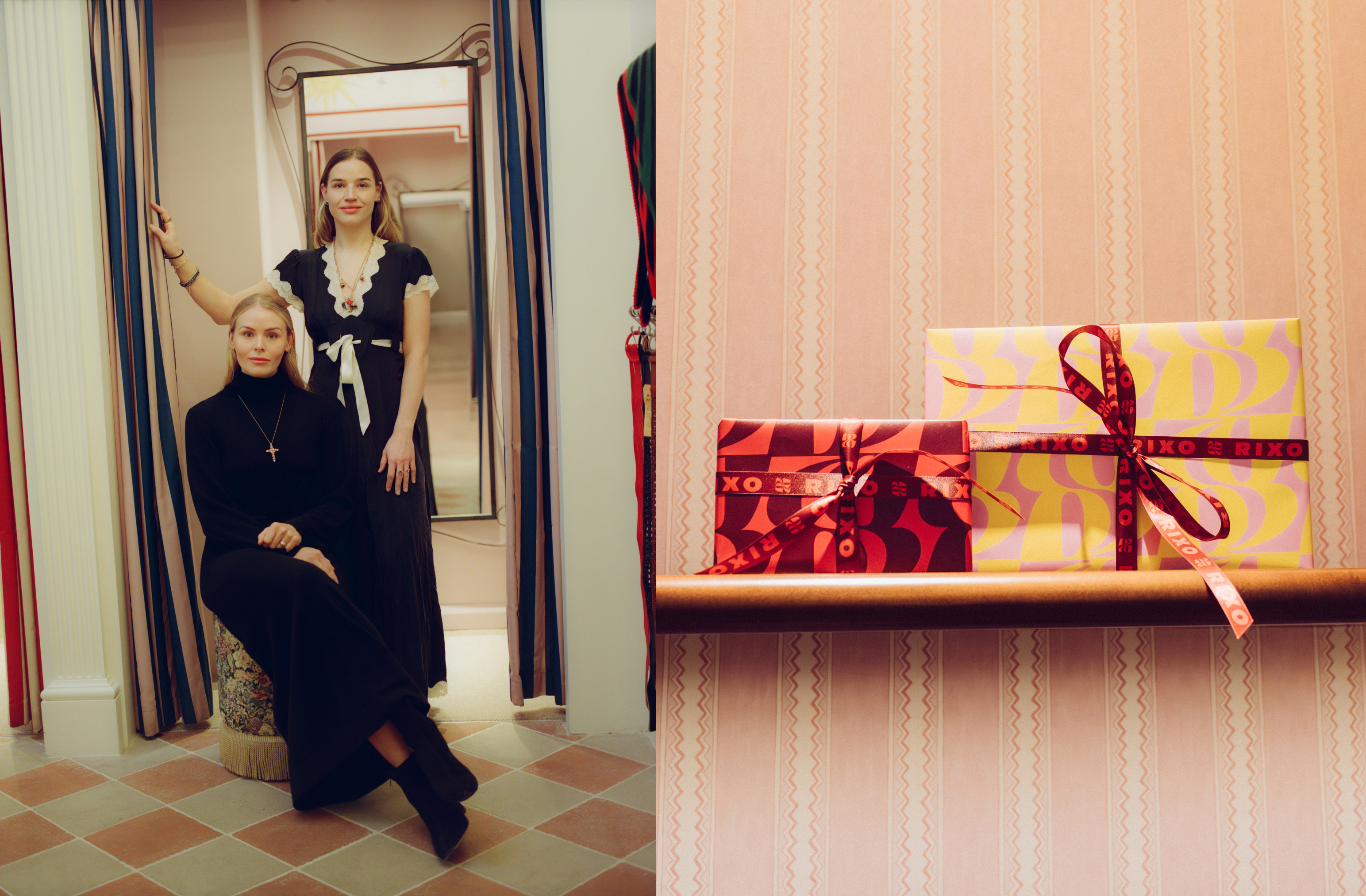
Ask them what they were like as children, and Henrietta smiles. “I was imaginative, like most kids — playing shops, rearranging my dolls’ house — but I grew up with four brothers and my dad ran a car garage. We played with toy cars pretending we were customers buying them. My mum was always bargaining with antique dealers, so I think I learned negotiating and relationship-building without even realising it.” A childhood spent in auctions and vintage fairs, hunting for surprises at unbelievable prices, has quietly shaped the entire RIXO worldview.
When she met Orlagh at the London College of Fashion, the alignment was instant. “We instantly clicked,” Henrietta says. “We never imagined it would turn into a decade-long business partnership; it was extremely organic.” They discovered they had the same taste, plucking the same print from opposite corners of a charity shop, functioning as a single, caffeinated organism during 3 a.m. group projects. “We would stay up all night working together,”* she says. *“It was so natural.”
Graduation brought a particular kind of freedom, no mortgages, no children, nothing to lose — and the sort of boldness that, in hindsight, reads like fate. “We thought, why not?” Orlagh says. “We were young, eager, and we had similar tastes across everything. We combined our names and made our first sample set.” The idea was simple, which is often why it works: vintage-inspired dresses in luxury fabrics at a price that didn’t feel exclusionary. “Amazing fit, beautiful prints, silk,” Orlagh says. “Our philosophy has stayed the same.”
Their first pop-up on Neal Street was part boutique, part living room, part hopeful experiment. “We sold vintage alongside our first collection,” Orlagh remembers. “Henrietta’s mum lent us furniture. It felt so homemade, in the best way.” They scraped together enough to pay their suppliers, and in the early days, that counted as a roaring success.
But the real education came from the women in the changing room. “Engaging directly with customers teaches you everything,” Henrietta says. “Seeing what makes someone light up — that feedback is invaluable." Those early devotees treated RIXO like a secret club, arriving at the “living-room shop” with stories of pieces they’d worn for years. Longevity mattered more than trend cycles; real life mattered more than Instagram. Their candour shaped the brand’s now-signature approach: inclusive sizing, multiple lengths, silhouettes that work for actual wardrobes rather than hypothetical ones.
The cult built slowly, but Net-a-Porter ignited it. “Seeing our brand alongside such established names was surreal,” Henrietta says. “It was the moment we thought, okay, this is really happening.”
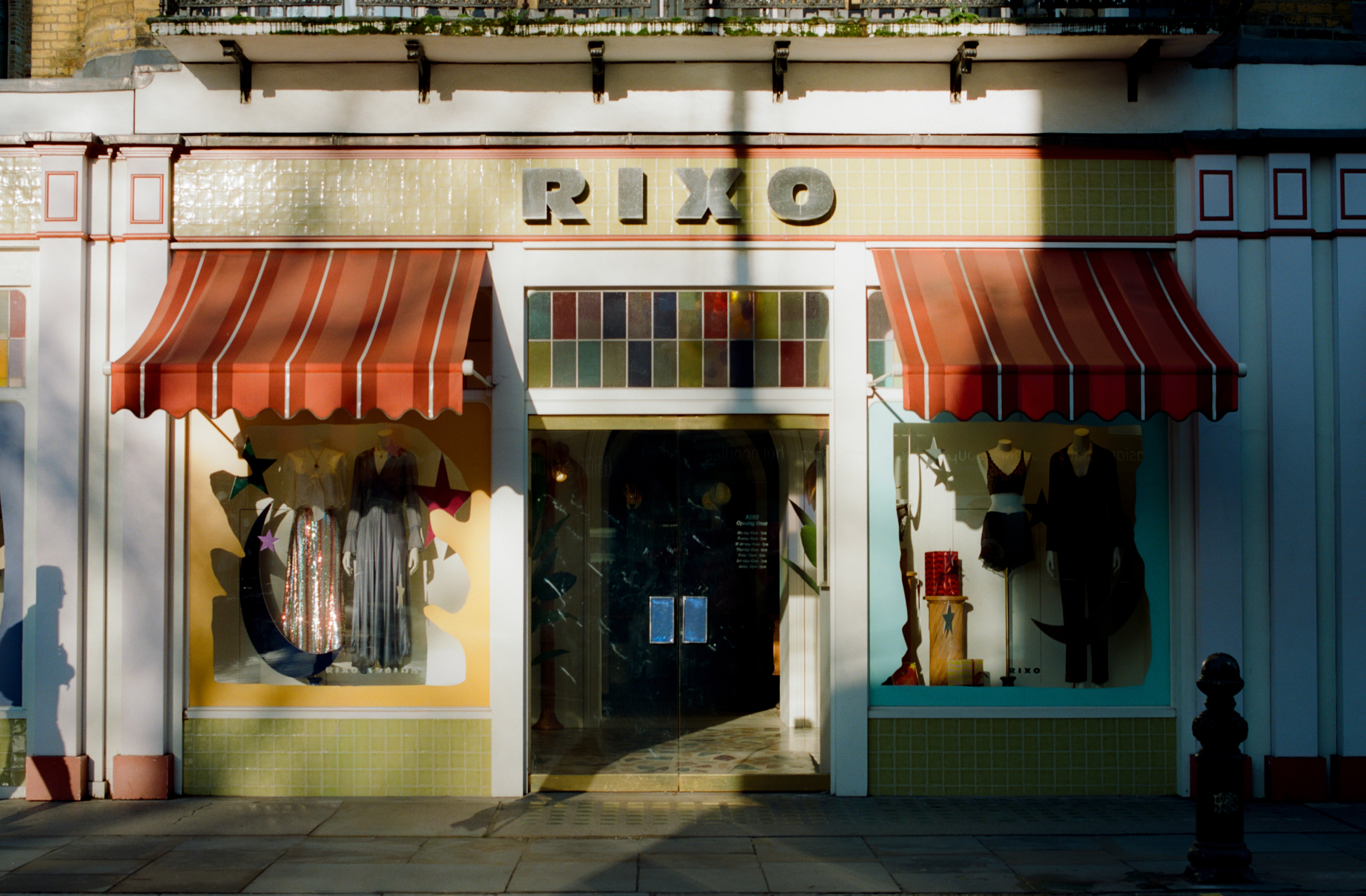
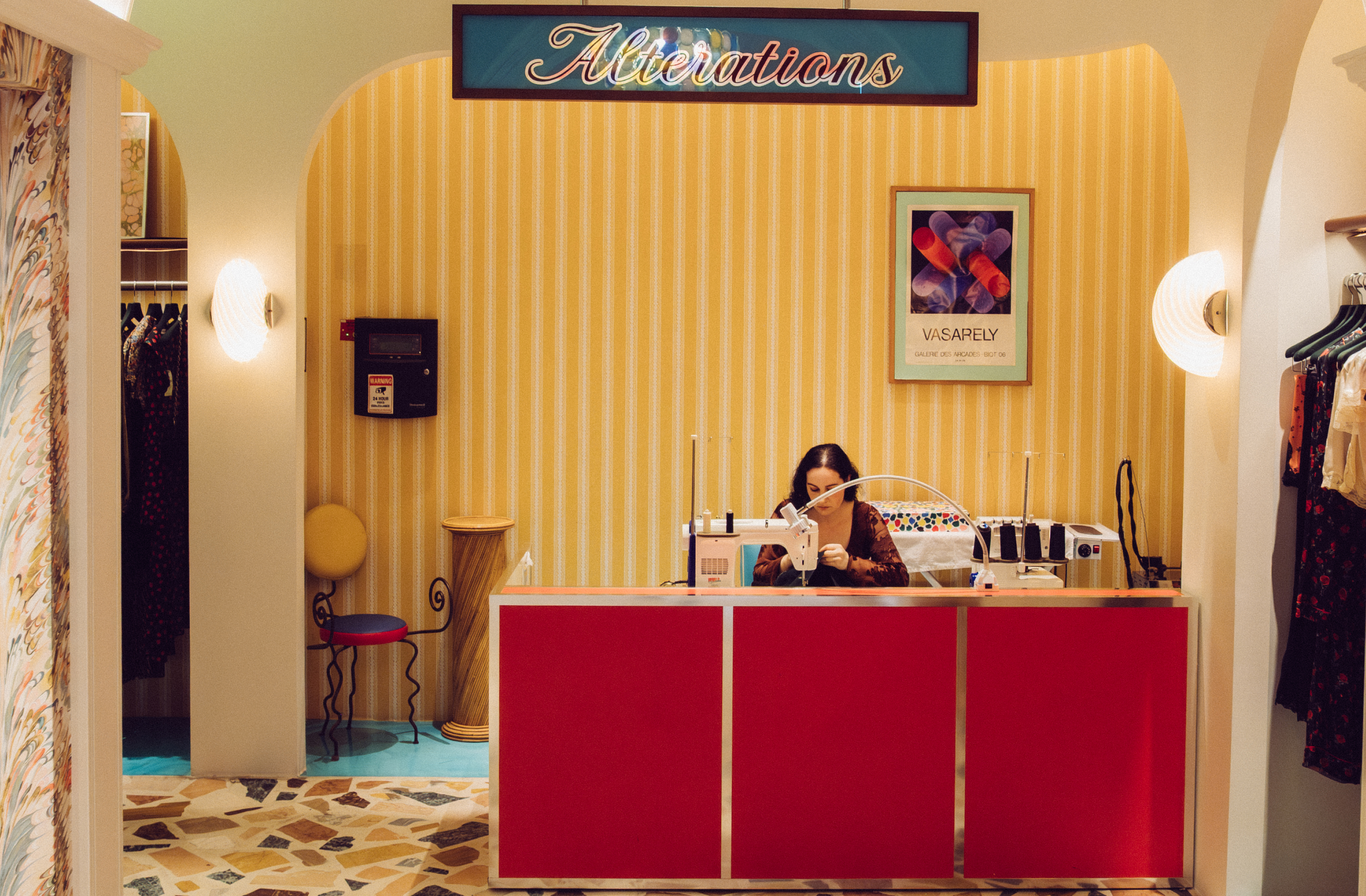
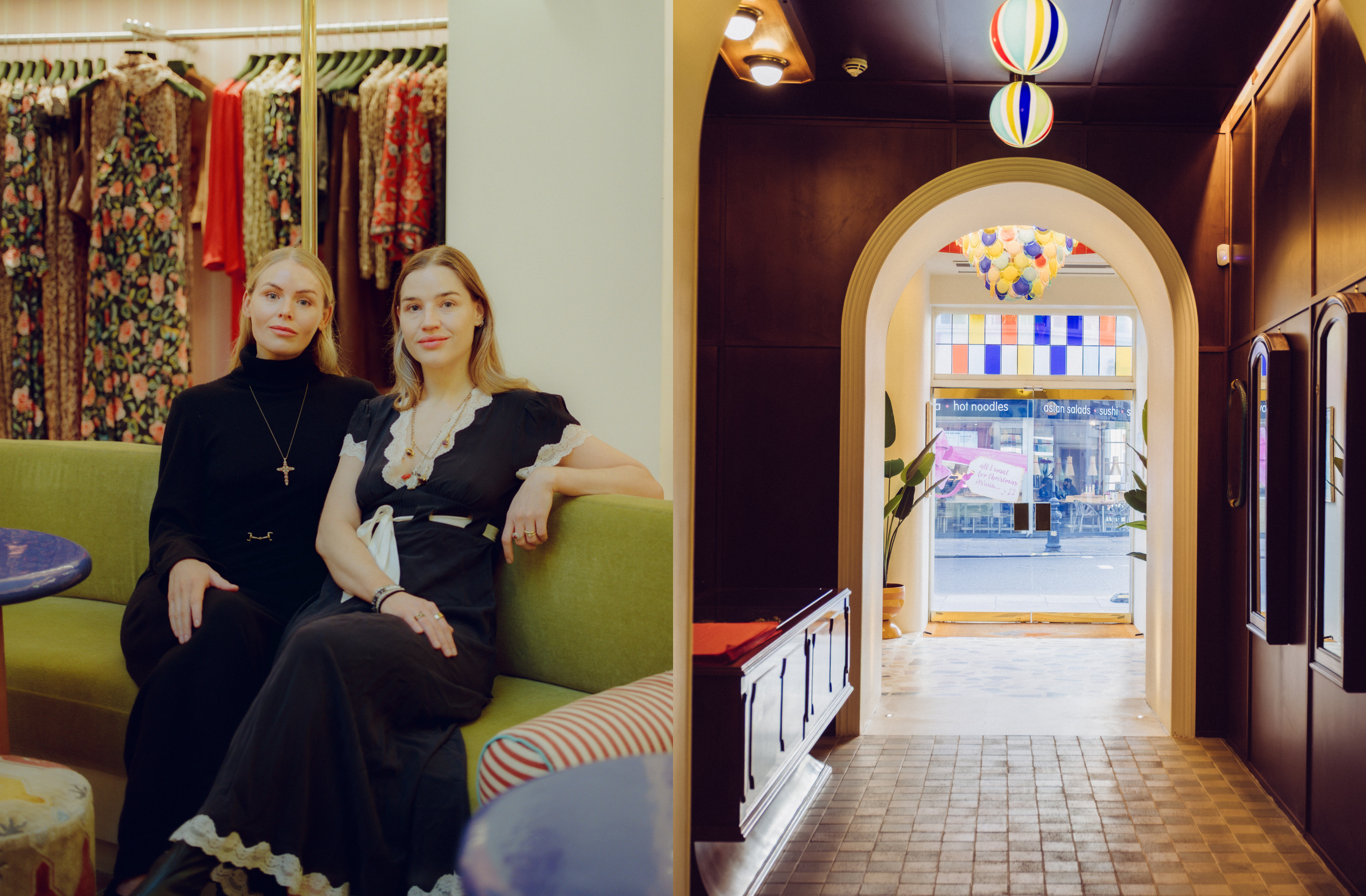
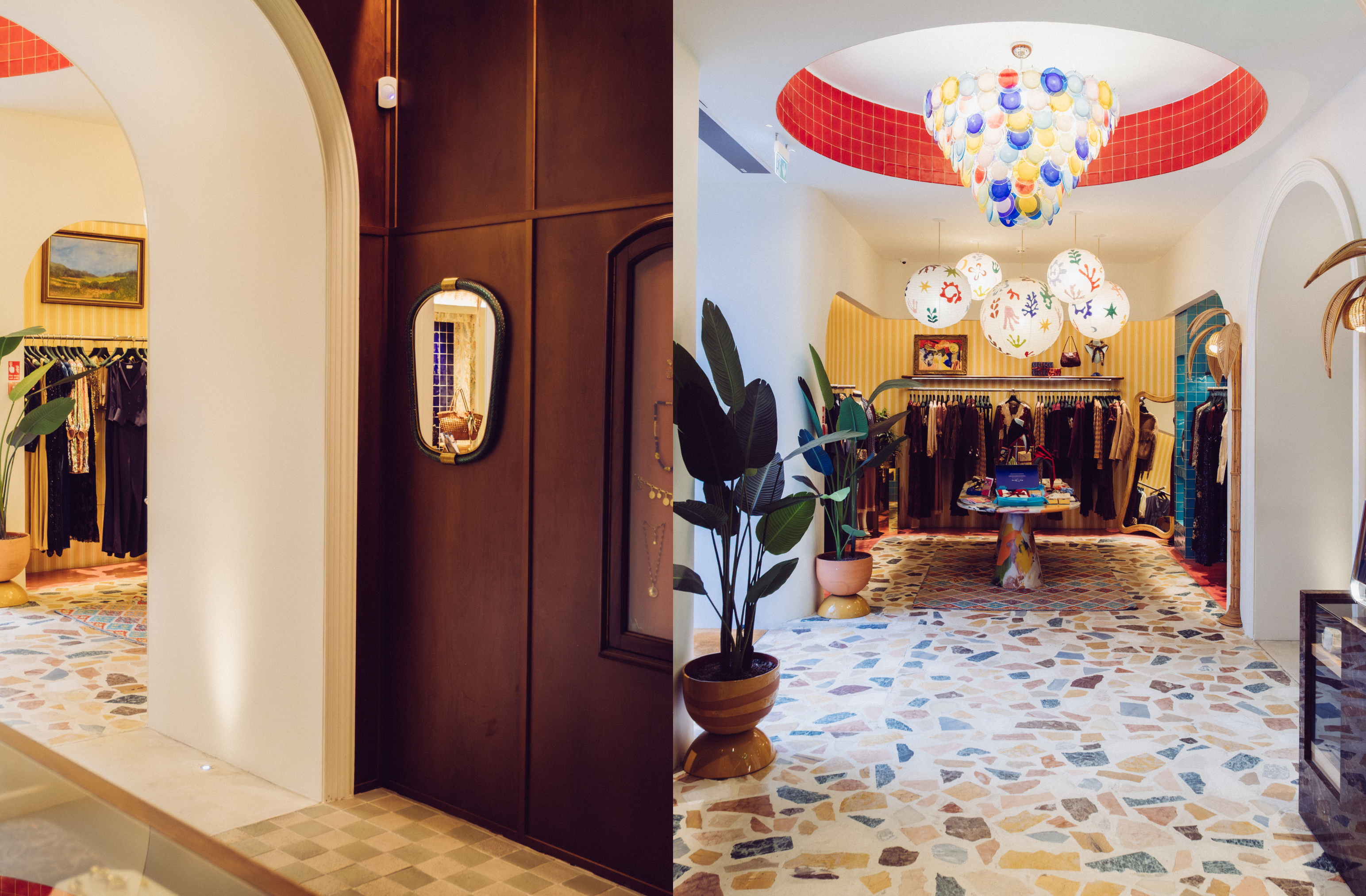
If the early years were about survival, the flagship on the King’s Road was about soul, restoring the sense of intimacy and community that first defined the brand. “Community is so key for us,” Orlagh says. “We wanted the flagship to feel like the living room RIXO was born in, somewhere people can relax, hang out, inspire each other.” The store is an ecosystem: coffee kiosk, cocktail bar, vintage furniture, colour everywhere, an alteration service and bridal suite tucked inside like a secret. And the thing customers adore most? The pre-loved section. “We believe the most sustainable thing is buying something that already exists,” Orlagh says. “People donate their old RIXO, others buy it. It’s beautiful circularity.”
“Opening the flagship was a dream come true,” Henrietta says. “We talked about having a store from the early days on the living-room floor. And now having a permanent presence in New York — that’s wild.” For Orlagh, the real thrill is quieter. “Seeing someone wearing RIXO in everyday life still makes me emotional. That’s the real pinch-me moment.”
Of course, the romance of an independent brand tends to skip the ugly bits, and they refuse to. “Brexit has been a huge challenge,” Henrietta says plainly. Increased shipping costs, taxes and duties halted growth in entire markets. “And now US tariffs. It’s tough.” There were foundational blows, too. “Our collection was stolen in Paris once. There have been so many ups and downs. You just have to keep going. Our team pulls us through. You cannot let people down.”
And if you assume that a flagship on the King’s Road implies deep-pocketed backing, they will gently set you straight. “People assume we have endless resources,” Henrietta says. “We are still independently owned with no investment. Everything has been built step by step.”
What keeps the partnership functioning after a decade? “We’re lucky,” Henrietta says. “We very rarely disagree creatively.” And when they do, the tie-breaker is simple: what feels authentically RIXO? Orlagh leads design, a process that happens, fittingly, in the margins of life. “My most creative moments come late at night when my husband and baby are asleep,” she says. “Or on weekends rummaging through vintage fairs. Even holidays revolve around fairs abroad.” Their archive of vintage treasures quietly seeds future collections.
“What excites me most right now is full outfitting,” Orlagh says. “Layers, knitwear, accessories, jewellery — seeing women style RIXO head-to-toe in their own way feels amazing.” Henrietta nods. “And we’re exploring new retail locations, more categories, community-driven initiatives. Anything that brings us closer to our customer energises us.”
If the last decade secured RIXO’s place as one of Britain’s most distinctive independent fashion voices, the next decade feels less like expansion and more like crystallisation — sharpening what already works, deepening what already matters. Their ambitions are bigger, but their values haven’t shifted an inch. In a market that moves faster every season, RIXO’s great strength is its refusal to rush: a brand built not on hype cycles but on eye, instinct, and the simple, enduring pleasure of a very good dress.