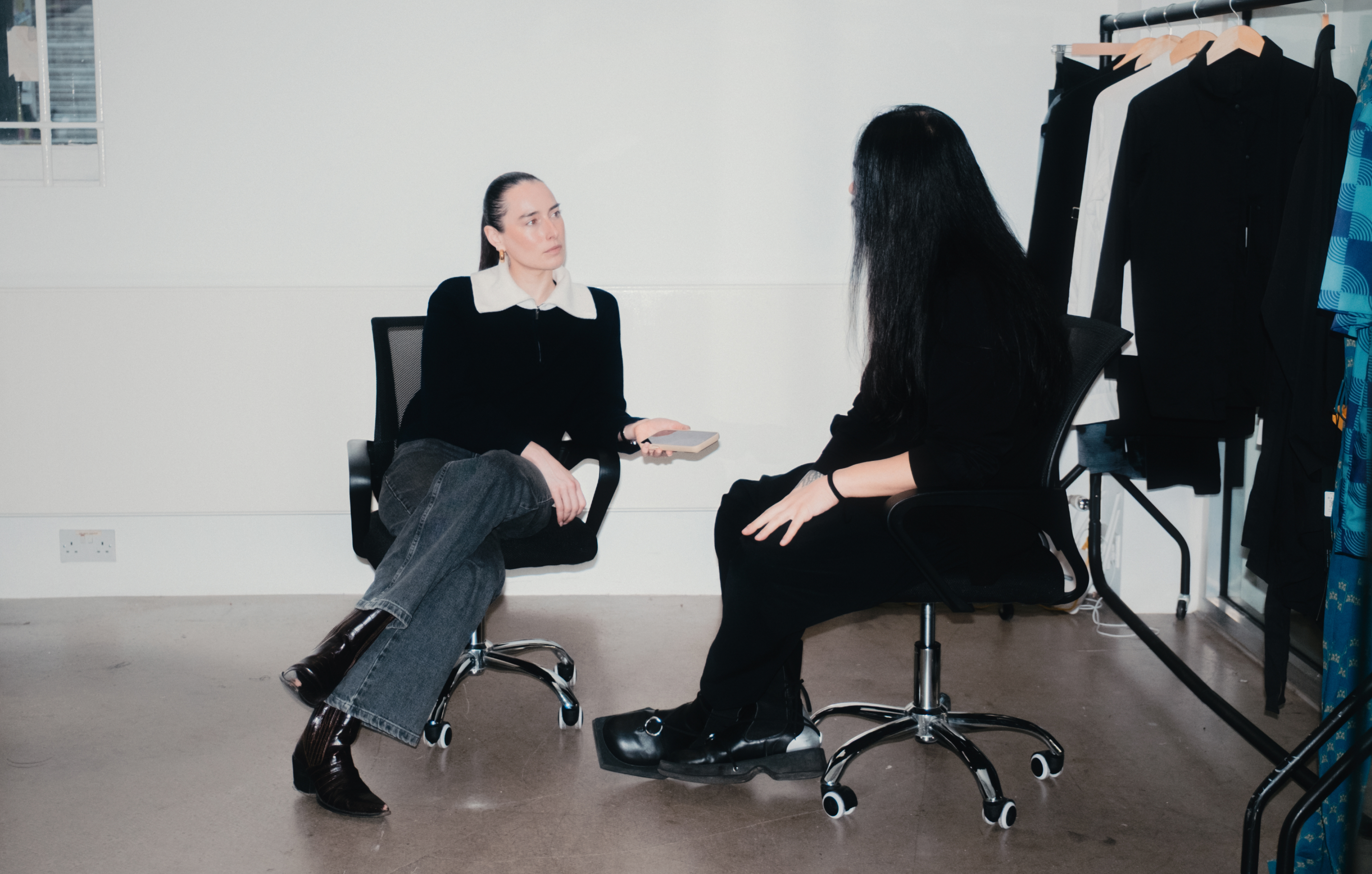
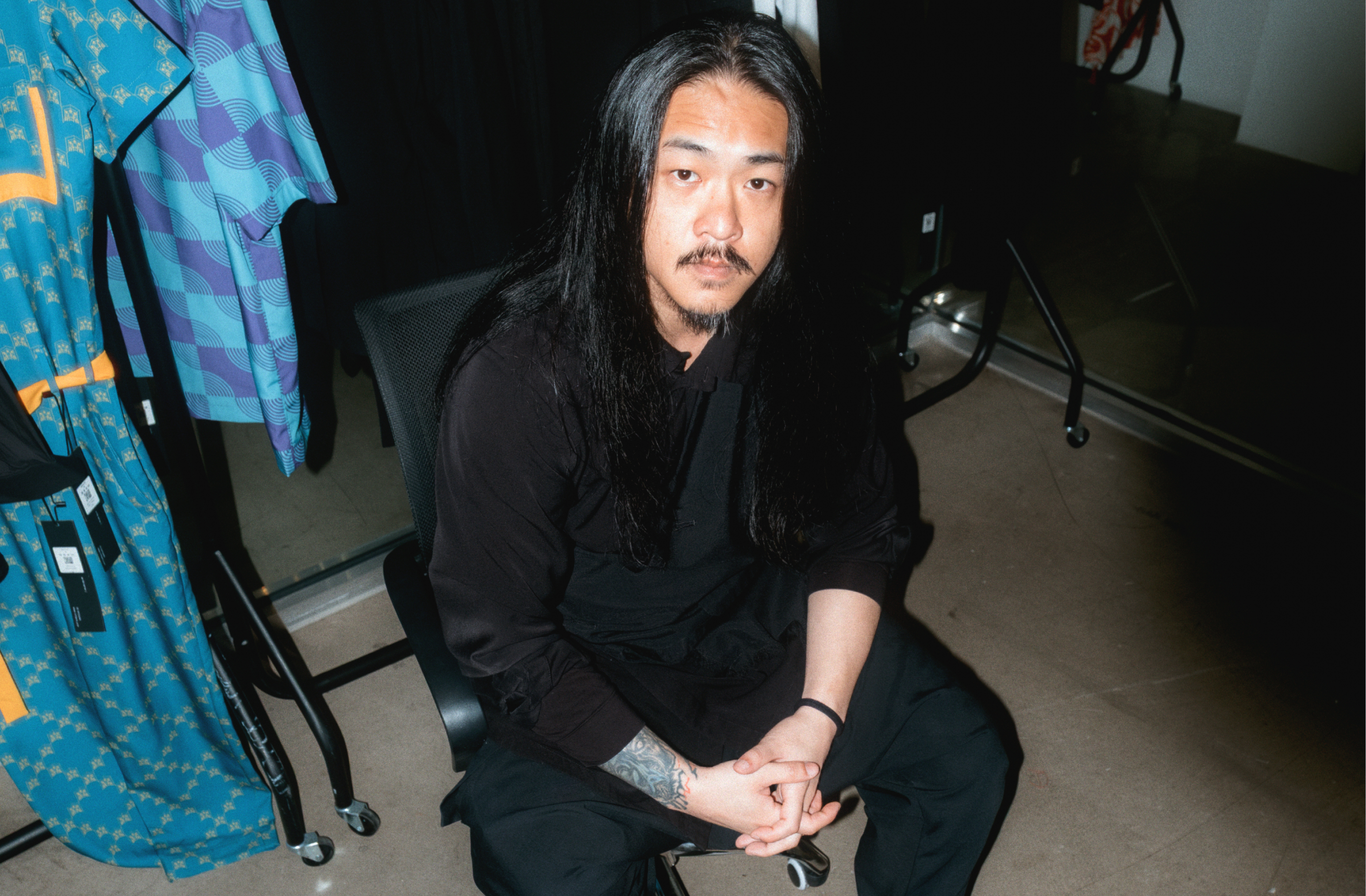
There’s something quietly subversive about Wei Kuo, founder of INFDARK. Raised in Taiwan with an instinct to question limits, he has built a brand that feels less like fashion and more like controlled disruption. Before design, there was dance: as a B-Boy, he competed internationally — even placing second at the Battle of the Year world championship — years spent choreographing rhythm, movement and precision.
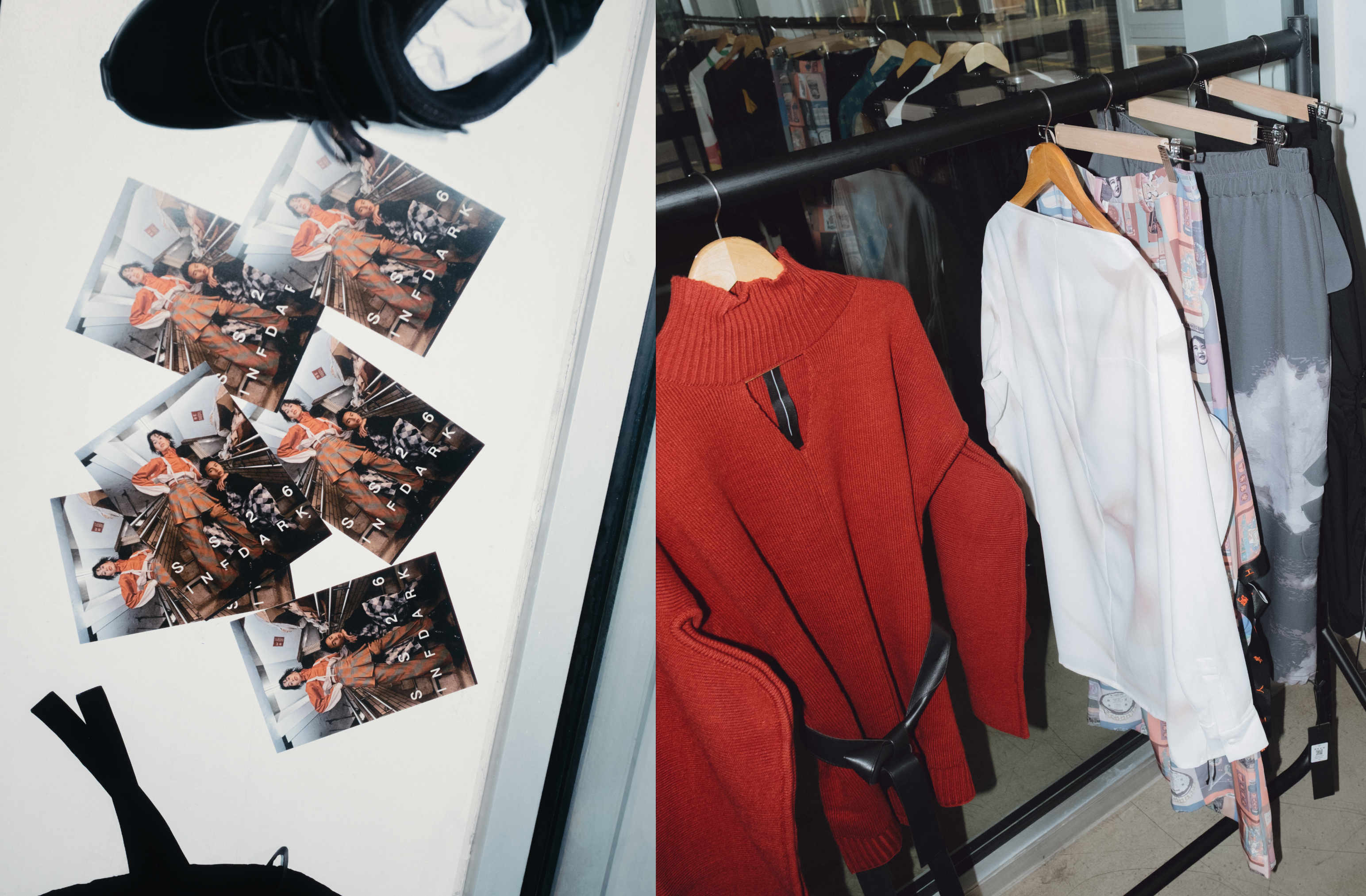
A few days after unveiling his AW26 collection, we went down to his Shoreditch pop-up to speak about the brand’s evolution and what comes next. Between rails of layered black tailoring and returning customers who now feel more like community than clientele, Wei Kuo reflected on growth — creatively and commercially. INFDARK may be rooted in black, white and tonal greys, a disciplined palette that sharpens focus on construction and depth, but its ambition is anything but muted. As the silhouettes become more fluid and the language more defined, the future feels expansive.
How did your upbringing in Taiwan shape your creative journey? What were you like as a child?
I’ve always had the instinct to question limits. Even as a child, I would ask: why does it have to be this way? Why isn’t there another option? Challenging existing structures felt natural to me — it’s simply how I think. I’ve always wanted to push beyond what’s already defined.
So you were rebellious?
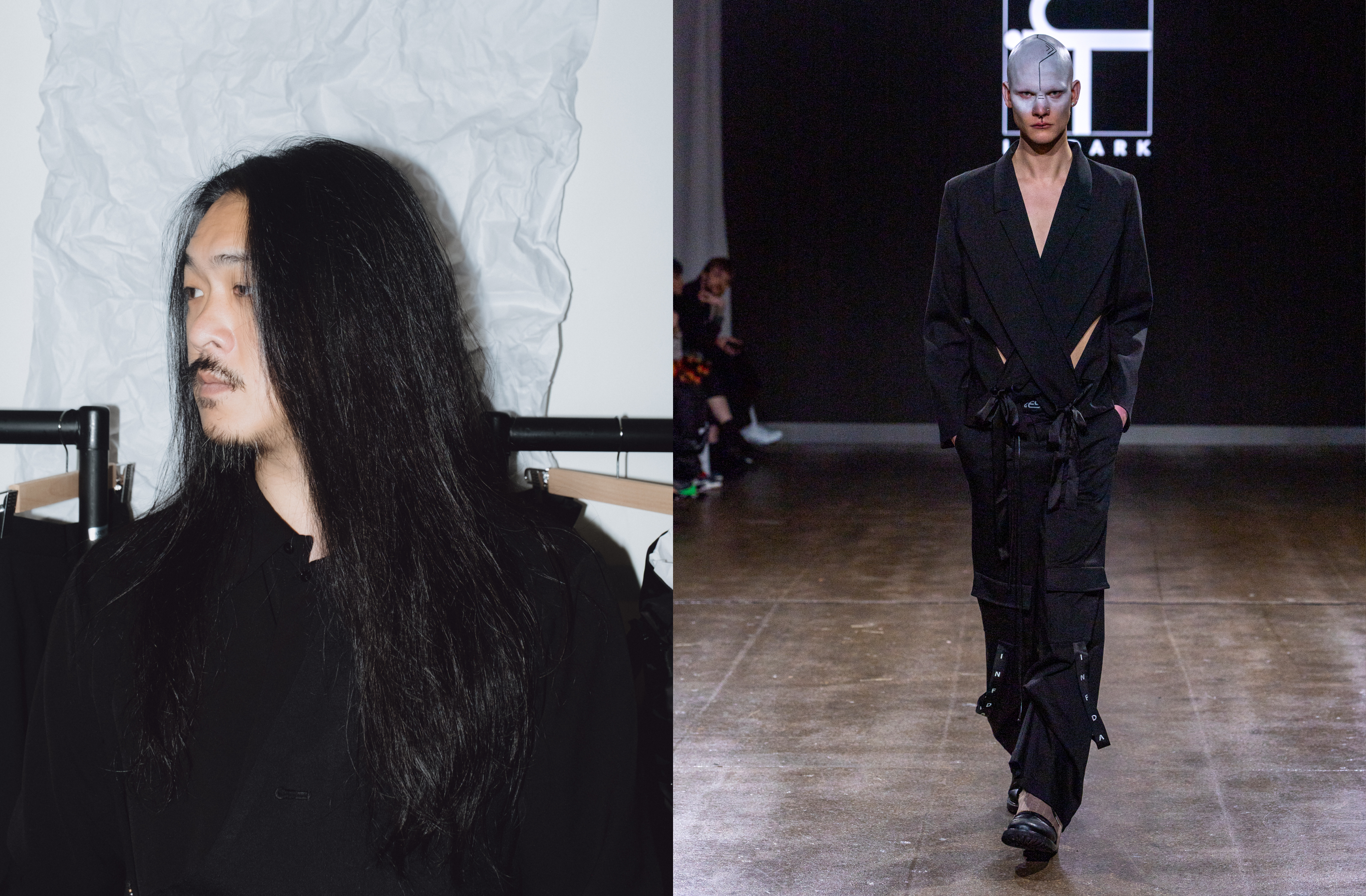
In some ways, yes. Before becoming a designer, I was a B-Boy. I competed professionally, coached dancers for many years and performed commercially. Our crew became one of the strongest in Taiwan, and we placed second at the Battle of the Year world championship — which is one of the biggest competitions in breakdancing.
That’s still a form of creative expression.
Exactly. Dance and design are actually very similar. In dance, you choreograph movements into a sequence; in music, you coordinate notes into harmony — I also played guitar. Fashion works the same way. You’re composing proportions, textures and silhouettes into something that moves and communicates. It’s all coordination and rhythm.
When did you decide to pursue fashion seriously? Did you study it?
It happened gradually. I was still coaching and performing as a B-Boy, teaching at a college in Taiwan, while also studying fashion design. If I’m honest, I first became interested in style at that age when you want to impress girls. You start paying attention to what looks good.
But the curiosity became deeper. I became fascinated by composition — how garments are constructed, how trends are formed. Eventually, I realised I didn’t just want to follow trends, I wanted to create my own. Fashion felt like a powerful tool. Not a loud revolution, not a protest — but a quieter way to shift perspective. Design speaks softly, but it can carry strong energy. For me, it’s a more refined way to change the world.
Your brand is known for muted colours — black, white, greys — though you’re beginning to introduce colour. Why start with such restraint?
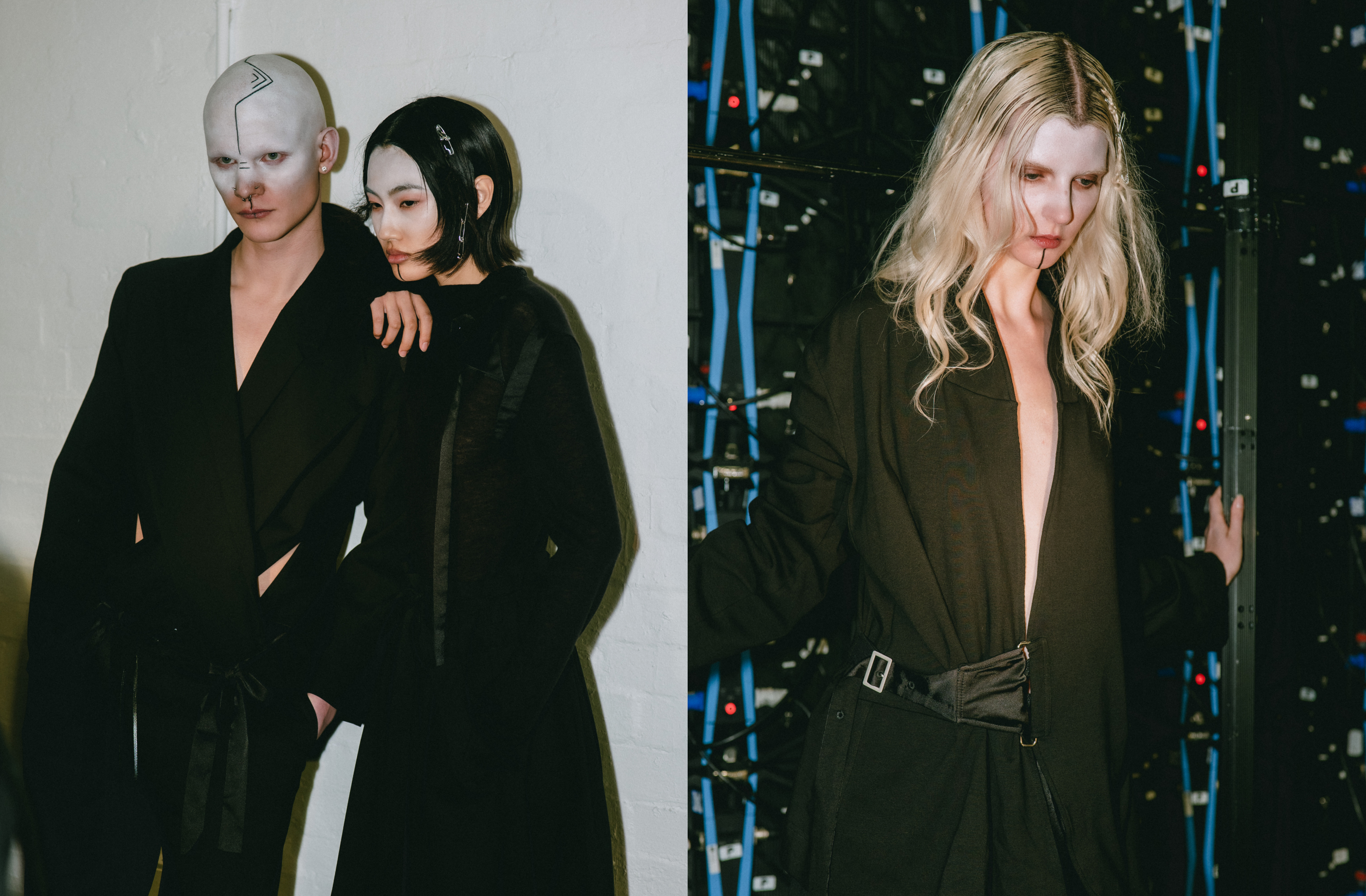
From the beginning, I set a rule for the brand: we would work only in black, white and grey. Limiting colour forces you to focus on detail, construction and technique. It’s more challenging than relying on colour to attract attention. With black in particular, the goal is depth. We don’t want a garment to feel flat or simple. We experiment with layering, texture and subtle structure so that even one black piece has dimension — shadows, contrast, movement. It’s about making black feel alive rather than minimal.
Why has it been so vital for the brand to exist in physical spaces — especially through multiple London pop-ups?
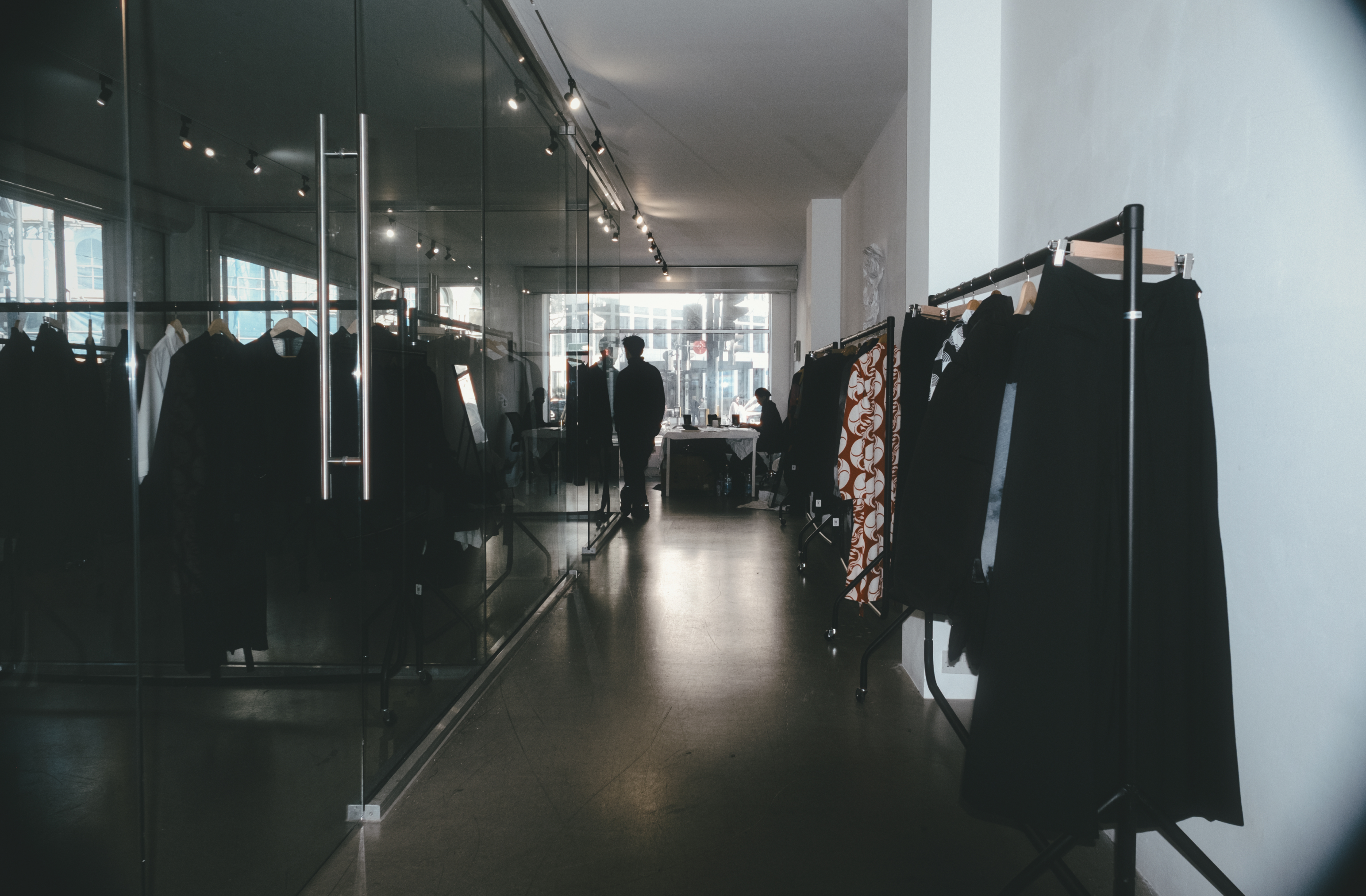
For me, a pop-up is never just retail — it’s about connection. When we first started working with you three or four years ago, we began building something steady in London. Over time, that has grown into a loyal community.
Coming back each fashion week is important because our customers expect it. They wait for us. They want to see the new collection in person, revisit pieces from previous seasons, and invest in what they’ll wear for the next six months. There’s a rhythm to it — we arrive, we reconnect, we evolve. But it’s also about meeting new people. Many customers begin as strangers and become friends. We share energy, ideas, and conversations. For a designer, that direct dialogue is invaluable. You hear real reactions. You see how garments move on different bodies. It’s live feedback — immediate and honest —, and that shapes the next collection. Digital is powerful, of course. But physical space creates emotion. It creates memory.
Who is the INFDARK customer?
Our core customer is someone who is tired of chasing mainstream trends. They’re not interested in wearing what everyone else is wearing. They’re searching for something they can’t easily find — something more individual.
We work hard to combine Eastern and Western design languages. You might see kimono-inspired construction integrated into a tailored blazer, or silhouettes that borrow from traditional Asian forms but are reinterpreted through a contemporary, Western lens. Shape is very important to us. The silhouette carries the brand’s identity.
Do you feel you are still developing as a designer?
I think the ultimate goal in the fashion industry is to become yourself — to be truly authentic to who you are.
And I believe development is part of that process. We are always evolving.
You describe the brand as sustainable, yet you produce multiple collections. How do you reconcile that?
For me, sustainability begins with function. The most important thing is that each piece lasts — not just physically, but emotionally. We design garments that can be worn for a long time, styled in different ways, and carried across seasons. That’s our response to environmental responsibility.
But at the same time, a brand is also a company. You have to think about business. You have to sell. You need strategy. That balance — between creativity and responsibility, between expression and commerce — is the hardest part.
You’ve mentioned COVID previously — how did it affect your business?
I actually appreciated COVID in a way.
When countries shut down, many high-end customers who used to shop from big luxury brands couldn’t travel anymore. Before, they would go abroad to buy from major houses — they would travel specifically for that experience. But during lockdown, they couldn’t leave the country.
So they started looking locally. They began asking: is there something here with similar design value, high quality and creativity that we can enjoy?
That was an important moment for us. Customers responded very positively to what we were doing, and through their feedback we realised we were on the right path. It gave us confidence about how to grow the brand.
Talk to me about your current collection and the inspiration behind it?
The new collection was shown three or four days ago. This time, I wanted to play with the idea of process. Instead of only presenting the final, refined silhouette — the finished result — I wanted to show more of the development behind it.
The pieces are more fluid and responsive. We worked with one core design unit — for example, a neckline — and then adjusted it across different garments. On one piece it might be larger, on another smaller, on another more subtle. The same design root runs through the collection, but it appears in different forms.
For the show, we also exposed some of that structure. It was about revealing how things are built — showing the evolution rather than just the polished end product. People often ask how a collection is developed. This season, we decided to simply show that process.
Where do you see yourself and your brand in five years?
It’s a tricky question.I think most designers, when asked this, give a very precise answer — like, “We want to stock in these stores,” or “We want to show at Paris Fashion Week,” something very specific. But I feel divided into two sides.
One side of me is completely creative. That part is driven by authenticity. I love music, I enjoy films, and I draw inspiration from culture. That’s the emotional, expressive side of me.The other side of me was trained to be a businessman. I was educated to think about numbers, strategy and growth. Even if I don’t always enjoy that part, I understand it’s necessary — sales, campaigns, commercial planning. That’s also part of building a brand.
Ten years ago, I might have had one very specific dream — like wanting to enter a certain concept store in Berlin. But now my thinking is different. Now, I want the brand to be ambitious. I don’t want to set boundaries. Once you build a business, there’s no point limiting it to one small goal.
If we can go somewhere — Paris Fashion Week, long-term stores in London, Dubai, anywhere — then we should go. The idea is simple: anywhere we have the opportunity to grow, we go.
What would be your advice to a graduate finishing this year?
I’ll answer this from the businessman side of me. First, I believe that if you’re graduating from fashion school, you already have the creative energy you need. You’ve had a good education. You understand your taste. Especially in the UK, there are strong resources and encouragement for young designers and the new generation.
So I’m not going to give advice about the creative side — that’s your job as a designer. What I want to talk about is business. Prepare your cash flow. That is very, very important. And know your target audience. These two things are the most important.
People see a runway show or a brand presentation, and they see luxury, excitement, a beautiful atmosphere. But they don’t see what’s behind it — the pressure, the sleepless nights, the daily stress. You handle design, sales campaigns, production, hiring stylists — everything involves money. If you don’t prepare financially, don’t jump in suddenly and go all in. It may not hurt you immediately, but eventually it will catch up with you.
Sometimes people say, “Just do it.” I don’t encourage that mindset. I think it’s irresponsible — especially if you’re involving other people in your business. You’re not only risking yourself, but you’re also risking others, too.
So yes — be prepared. Take your time. Study the business side properly.i