The Resurrection of Fuchsia Shaw
28 Nov 2025
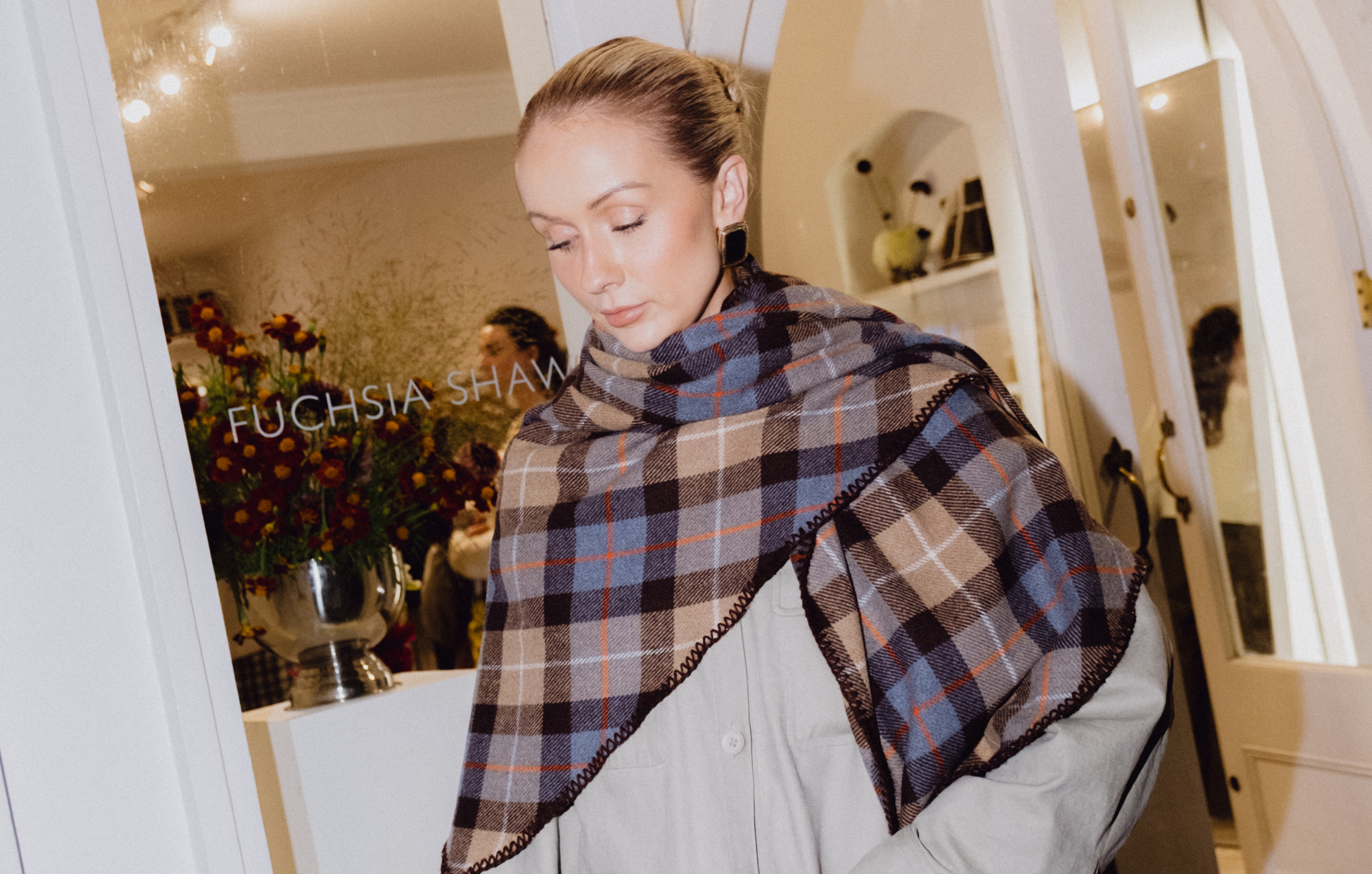
When Amy Shaw opened her first Fuchsia Shaw pop-up this autumn, she did so with the rare composure of someone who had already survived the thing most founders dread: she had closed her brand.
In 2022, after years spent hand-making and selling clothes largely on her own, Shaw pressed pause on the label that had quietly built a cultish, early-internet-era fandom online. From the outside, it looked as though the business was booming; inside, the numbers refused to bend. “I ended up in 2022 closing the brand,” she says. “I just absolutely was like burnt out. I’d messed up badly. I was turning over loads of money but not making any money.”
It’s the kind of confession entrepreneurs tend to disclose privately, whisper-quiet, shaded with embarrassment. Shaw delivers it plainly, without melodrama. She has, after all, already done the hard part: stepping away, reassessing the entire architecture of the label, and choosing — with intention this time — to return.
Her relaunch in summer 2024 was not so much a second act as a reconstruction. The brand’s backend was rebuilt from scratch: new factories, new fulfilment, new ways of working. But the essence of her aesthetic — slinky, clever, a little louche in that old-world way — remained intact. “It was kind of a passion project before,” she says. “But now I have a much clearer vision for the brand.”
The desire to design had always been there. As a child, she was quietly arty — “a very cute, sweet little girl” — and imagined herself as a textile artist. She even did her teenage work experience with a wallpaper designer. “I’ve always been very much into fabric and art,” she says. That love of texture followed her to university, where she studied costume design and drifted through film wardrobes, theatre racks, and music-video sets. “Anywhere that needs a wardrobe, I kind of did jobs like that,” she says. But it didn’t fit. What she wanted was to build something of her own.
Her first attempts at a brand were satisfyingly scrappy: clubwear, swimwear, dresses that were easy to sew and easy to sell. “It wasn’t necessarily what I liked,” she says, “but it gave me the confidence to know that I could sell clothes.” What she truly wanted to make were pieces that captured the energy of high fashion — but at a price point unattainable for most young designers. “I was really into high-end luxury fashion, but that was not affordable,” she says. “I’d watch the fashion shows and want to wear that, but it wasn’t available anywhere.”
The business grew, but so did the strain. Everything ran through her — design, production, logistics, operations — and the brand ultimately became too heavy to carry. “It was not having big enough profit margins and taking on too much,” she says. *“Not delegating.” *There’s a particular loneliness to that kind of entrepreneurial misstep: too busy to fix the problem, too underfunded to hire someone who could.
After closing the brand, she retreated. “I licked my wounds for a little bit and did some gardening,” she says, almost apologetically. But beneath the quiet was a slow, deliberate reconstruction. She searched for new production partners, overhauled her systems, and eventually found the factory she now works with — an alliance that feels foundational to this new era. “I started with them again, started small,” she says. “I’ve taken it really seriously ever since.”
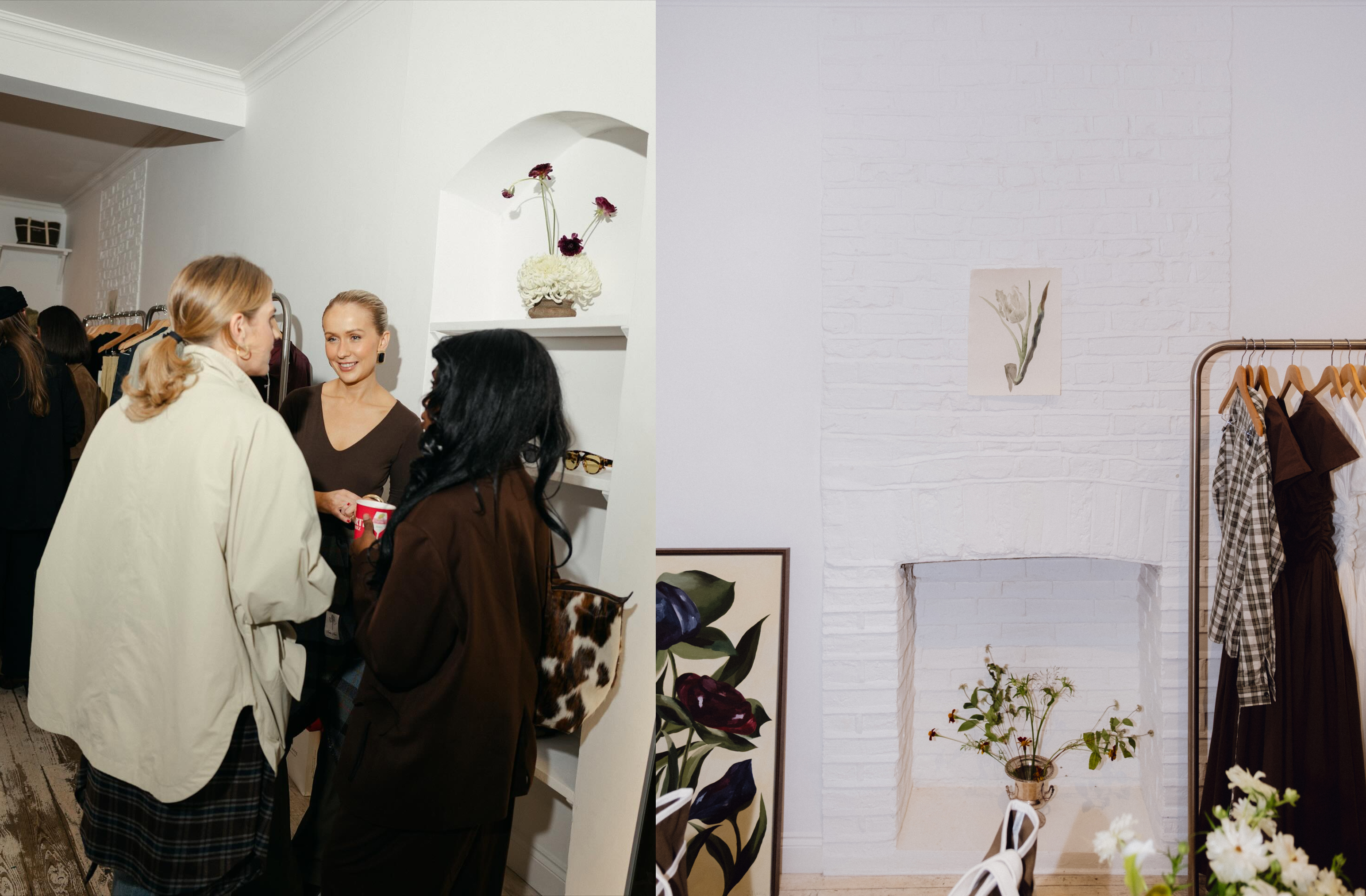
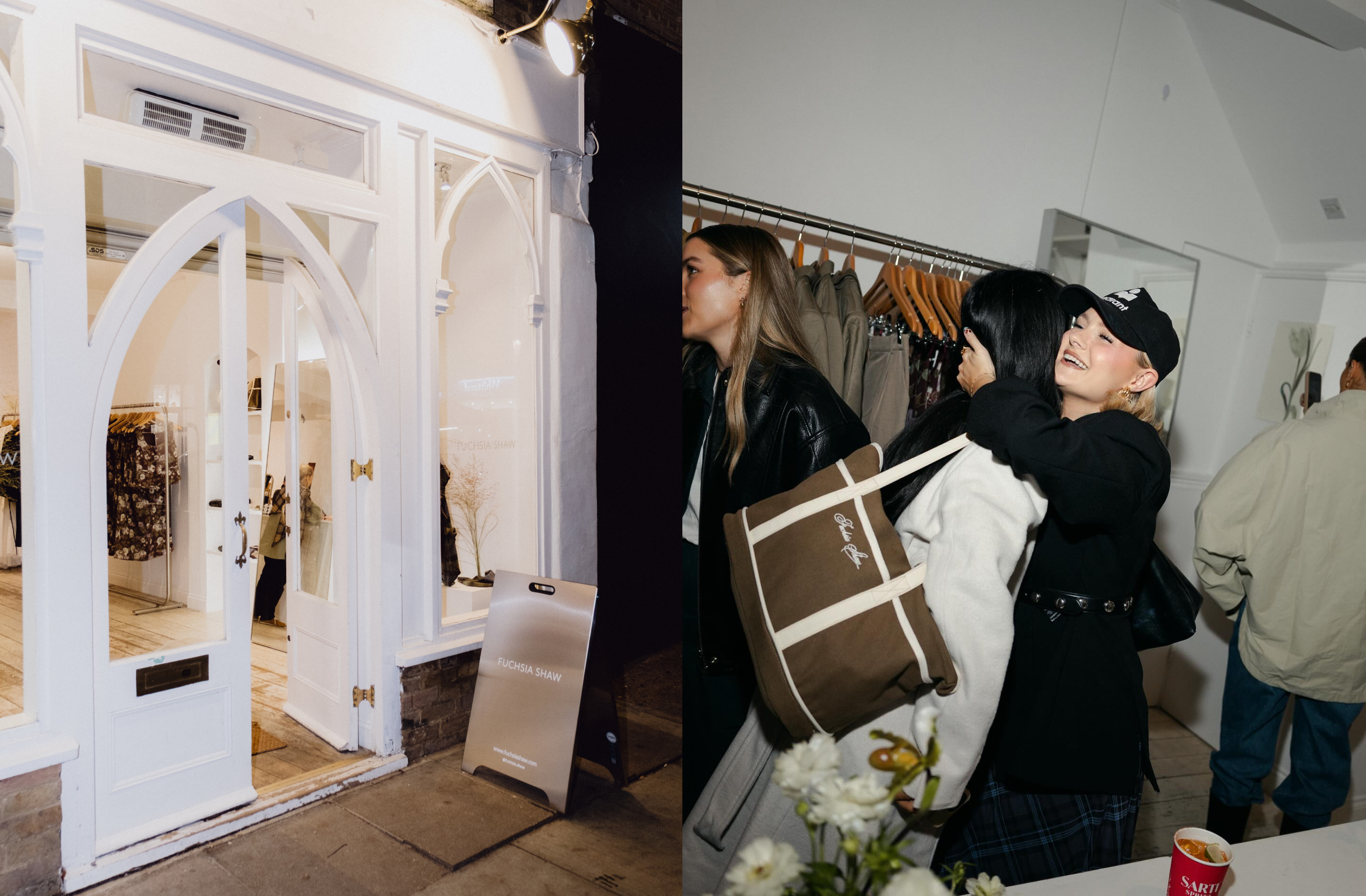
If the relaunch reconnected her with her vision, the pop-up reconnected her with her customer. Shaw had always known she had a loyal community online, but the physical store made it visceral. “They all came in wearing the original stuff I made five years ago,” she says, sounding genuinely moved. “At the pop-up is where I really learn about the customer — getting to know them in real life, learning who they are, what they do.”
The decision to step into physical retail came from a series of self-imposed challenges (and a persuasive business coach), but also from a desire to anchor the brand in something resolutely human. “In this whole AI age,” she says, “I’m interested in anything that’s an anti-AI. Being in real life is definitely anti-AI.”
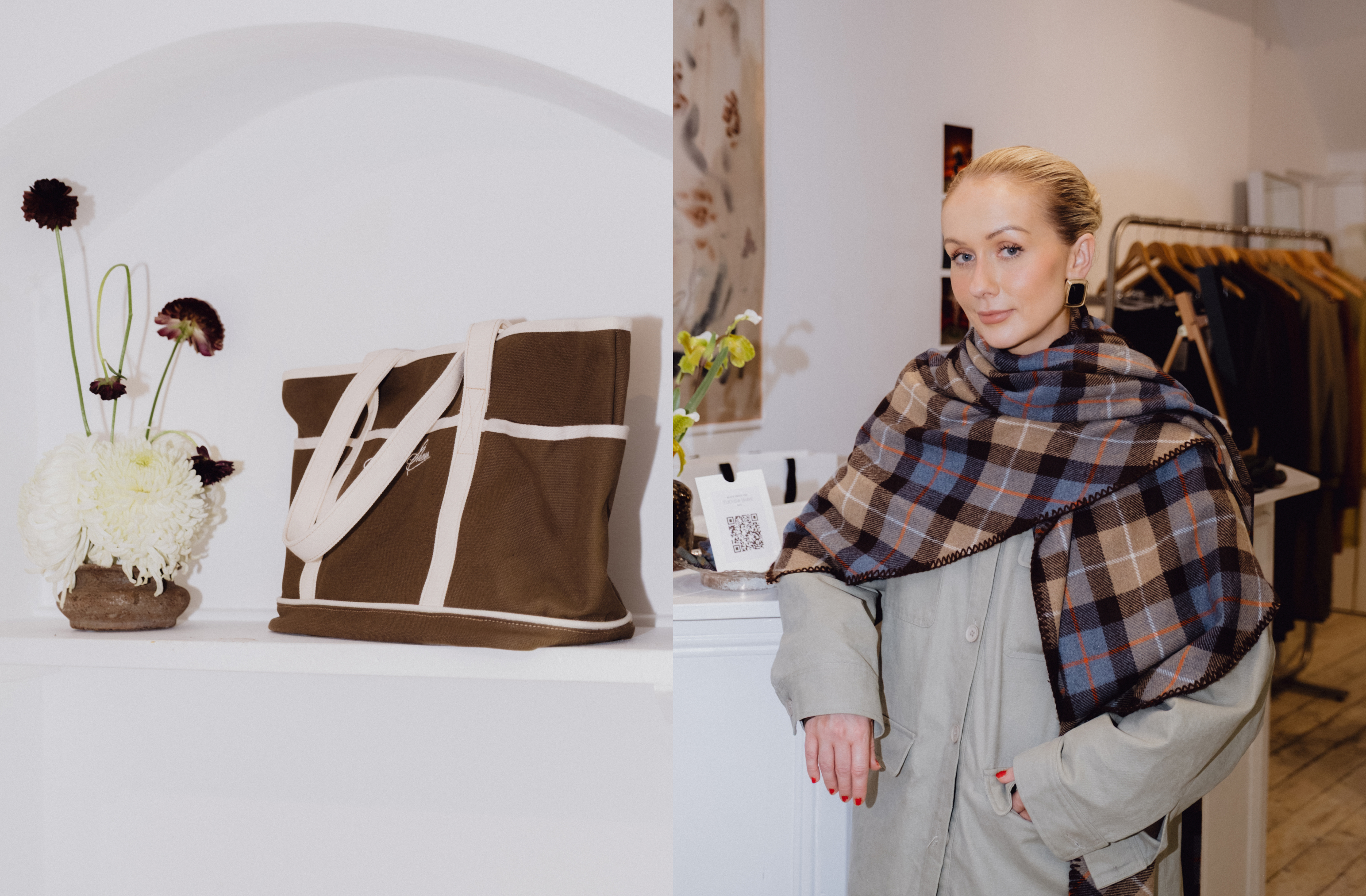
The store itself — a bright, elegant King’s Road space with an instinctively flattering layout — was an immediate yes. Shaw filled it with florals, art, and her signature silhouettes, creating that particular Fuschia Shaw alchemy: heightened, feminine, a little theatrical without being costume. “I immediately liked the space,” she says. “I knew as soon as we put our clothes in there with some florals and art, it was going to look amazing.”
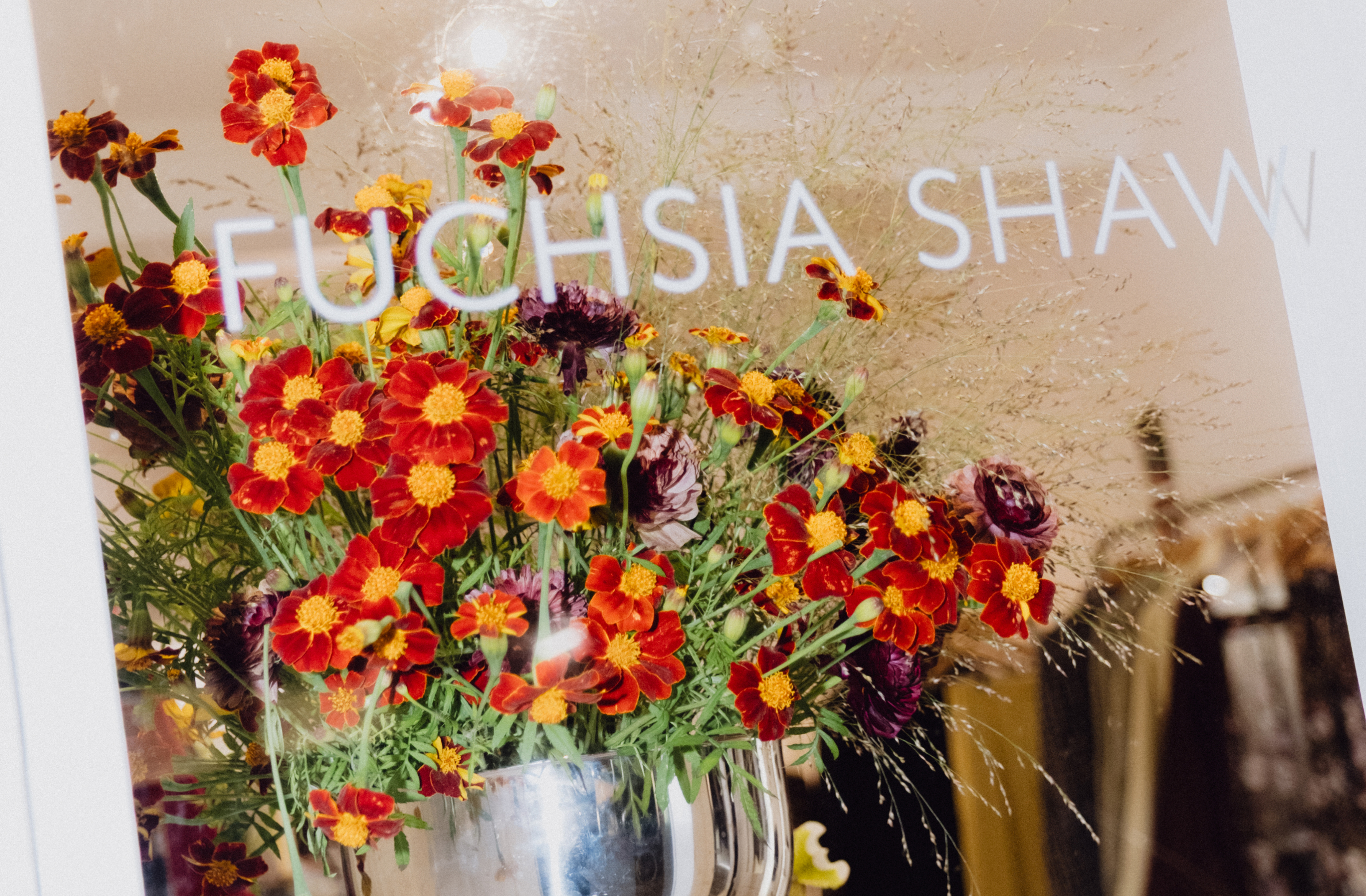
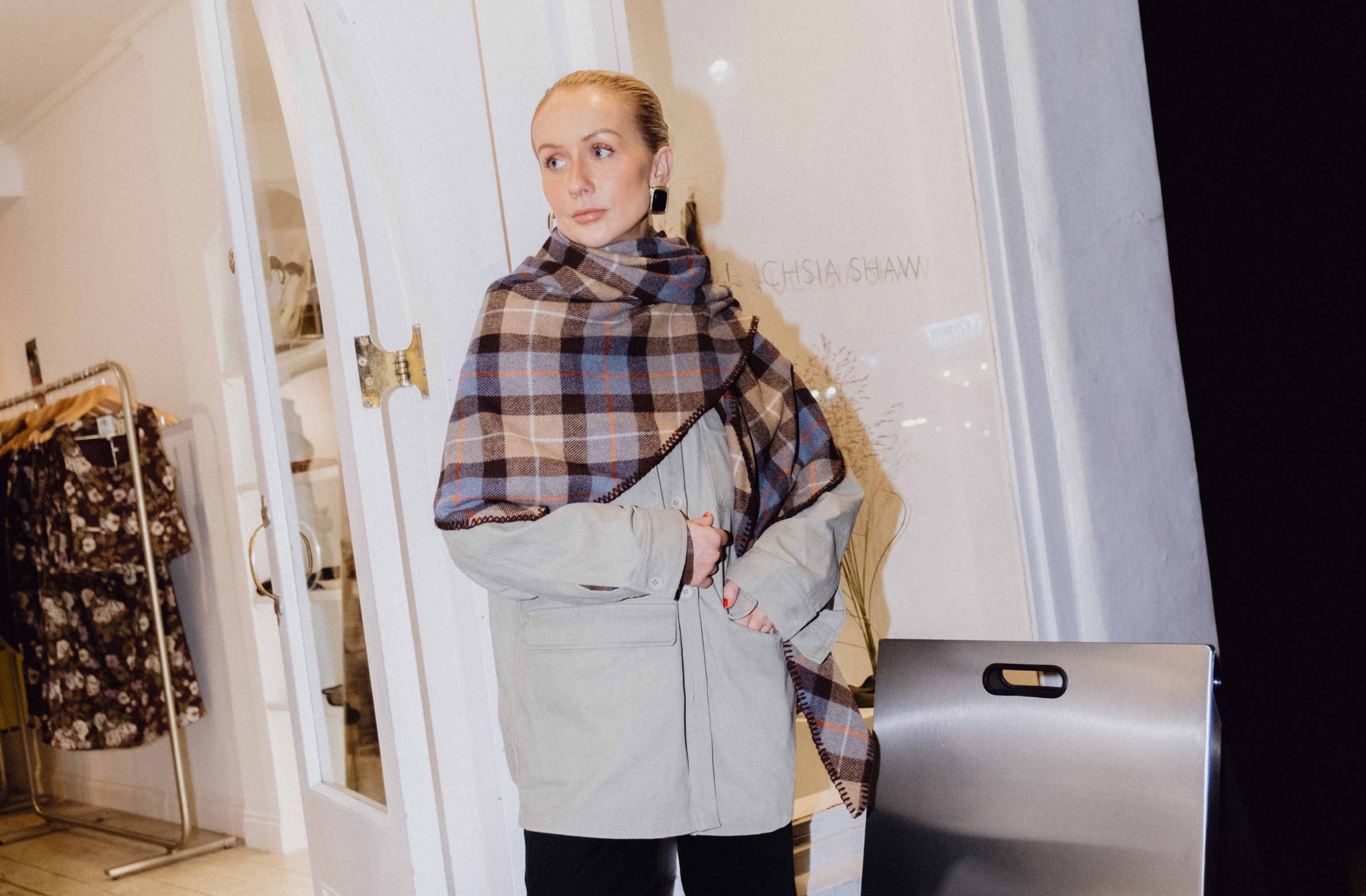
But it was the retail education she found most illuminating — the tiny details that shift buying behaviour in ways spreadsheets never quite capture. On the first day, they sold no scarves. “On day two I wore one and we hung some on hooks around the shop,” she says. “They were folded before, and people didn’t want to unfold stuff.” After the repositioning, the scarves became the bestselling item.
“You always hear about merchandising in supermarkets,” she says, “but you forget how important merchandising is in a shop.”
The whole week — exhausting, exhilarating, unavoidably demanding — reminded her why physical retail matters. “We just had the best time,” she says. “Being amongst the brand, meeting our customers — it was really impactful.” They also treated the shop as a content engine. “We took the opportunity that we were working in real life together to create more content,” she says. “It’s done a lot for us online as well as offline.”
The experience has left her thinking firmly about what comes next: larger spaces (“we had queues for the changing rooms”), more activations, perhaps even a permanent home. “A pop-up feels like such a big step,” she says. “But it’s so much more achievable than I thought. And so much more impactful than the cost of the outlay.”
When pressed on the advice she wishes she'd had at the beginning, she pauses. “I suppose that you should just go for it and be braver,” she says. “You never know what’s going to happen.”
And then, because the season demands it, she offers a description of her perfect Christmas shopping day — which, in true founder fashion, she plans to spend alone. “I love shopping on my own,” she says. She pictures herself wandering down Bond Street, buying beautifully scented things, trying on pieces without anyone rushing her. “London is very inspiring and festive,” she says. “That would be my ideal.”
Before we end, she adds one more thing, unprompted: “Appear Here has been really, really helpful and accommodating,” she says. “Just a pleasure to work with.”
If the first era of Fuchsia Shaw was defined by instinct, improvisation and overwork, the second feels steadier, sharper, and more purposeful. Shaw has rebuilt the business the way she wished she had done the first time: with structure, backing, a clear vision, and an understanding that glamour and graft must always arrive in equal measure. Her return doesn’t feel tentative. It feels inevitable.